Helicopter Rescue from Lobuche is a crucial emergency service for trekkers and climbers facing serious health challenges in one of the highest and most remote points on the Everest Base Camp (EBC) trekking route. Located at an altitude of 4,910 meters (16,109 feet), Lobuche lies just two days before reaching Everest Base Camp. While the views are spectacular, the environment is harsh and unforgiving. When medical emergencies strike whether from altitude sickness, injury, or extreme fatigue a rapid helicopter evacuation is often the only way to get the patient to safety.
Most trekkers reach Lobuche after several days of strenuous hiking, typically ascending from Dingboche (4,410m) or Thukla (Dughla) on their 7th or 8th day of the EBC trek. This portion of the trail is steep, rocky, and at a significantly high elevation. The body is under immense stress due to lower oxygen levels, especially if acclimatization days have been skipped or rushed. Despite best efforts, even well prepared trekkers may begin to show symptoms of Acute Mountain Sickness (AMS) or more severe conditions like HAPE (High Altitude Pulmonary Edema) or HACE (Cerebral Edema).
What makes Lobuche particularly dangerous is the limited medical infrastructure. There are no hospitals or emergency clinics nearby only basic lodges and teahouses. In case of sudden illness, injury, or severe altitude symptoms, there is no time to descend on foot. A helicopter rescue becomes the only fast and life-saving solution, allowing trekkers to descend to Lukla or Kathmandu within minutes rather than days.
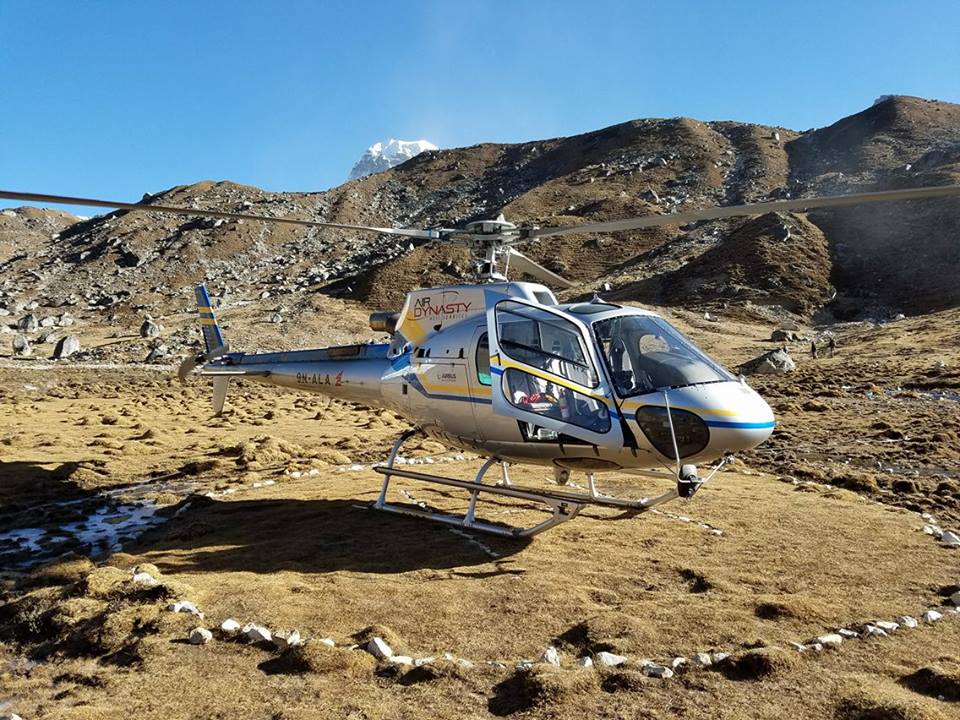
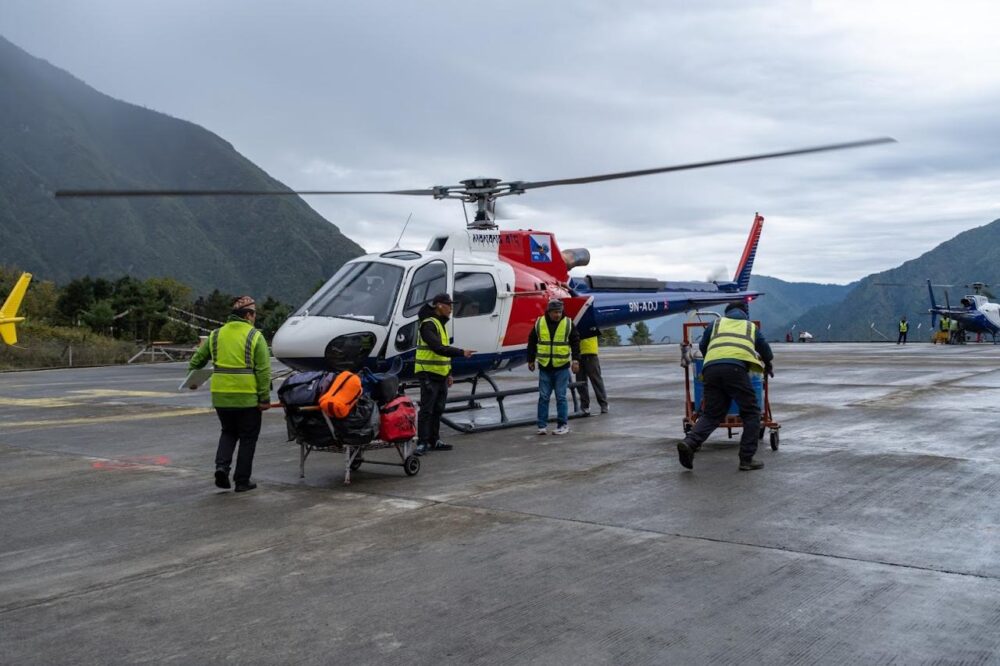
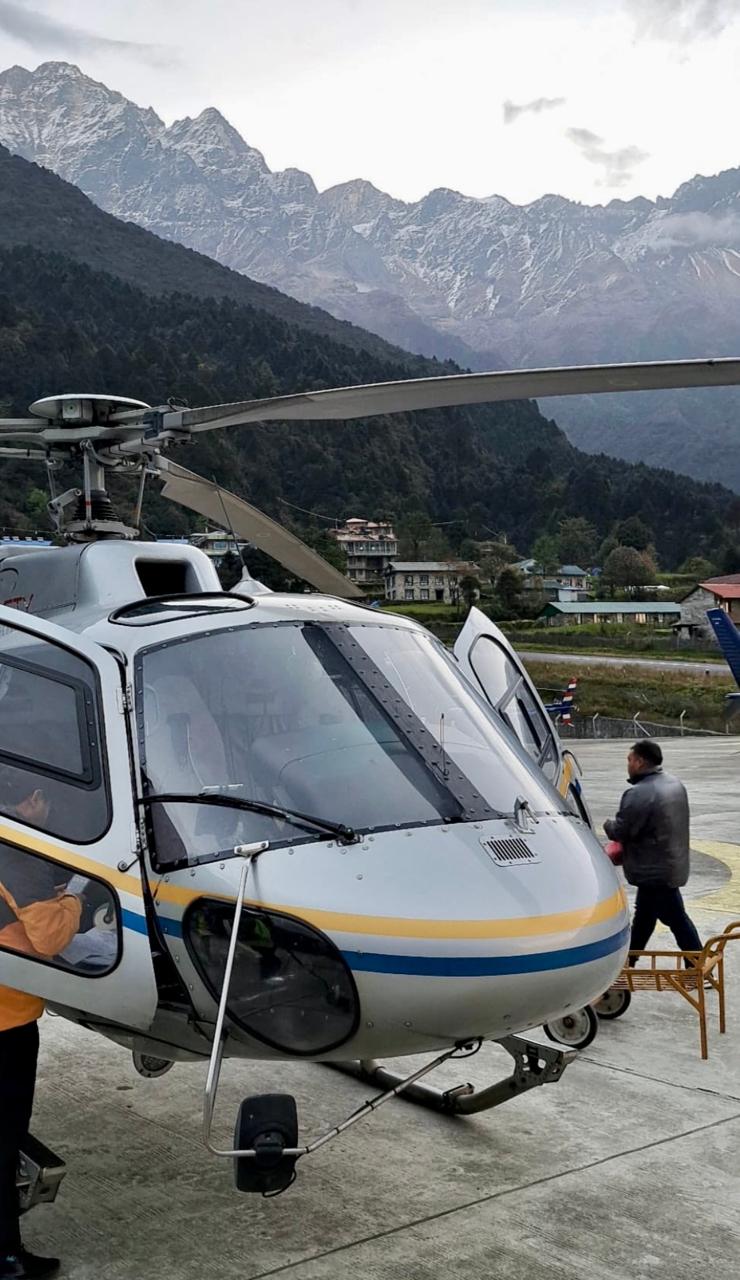
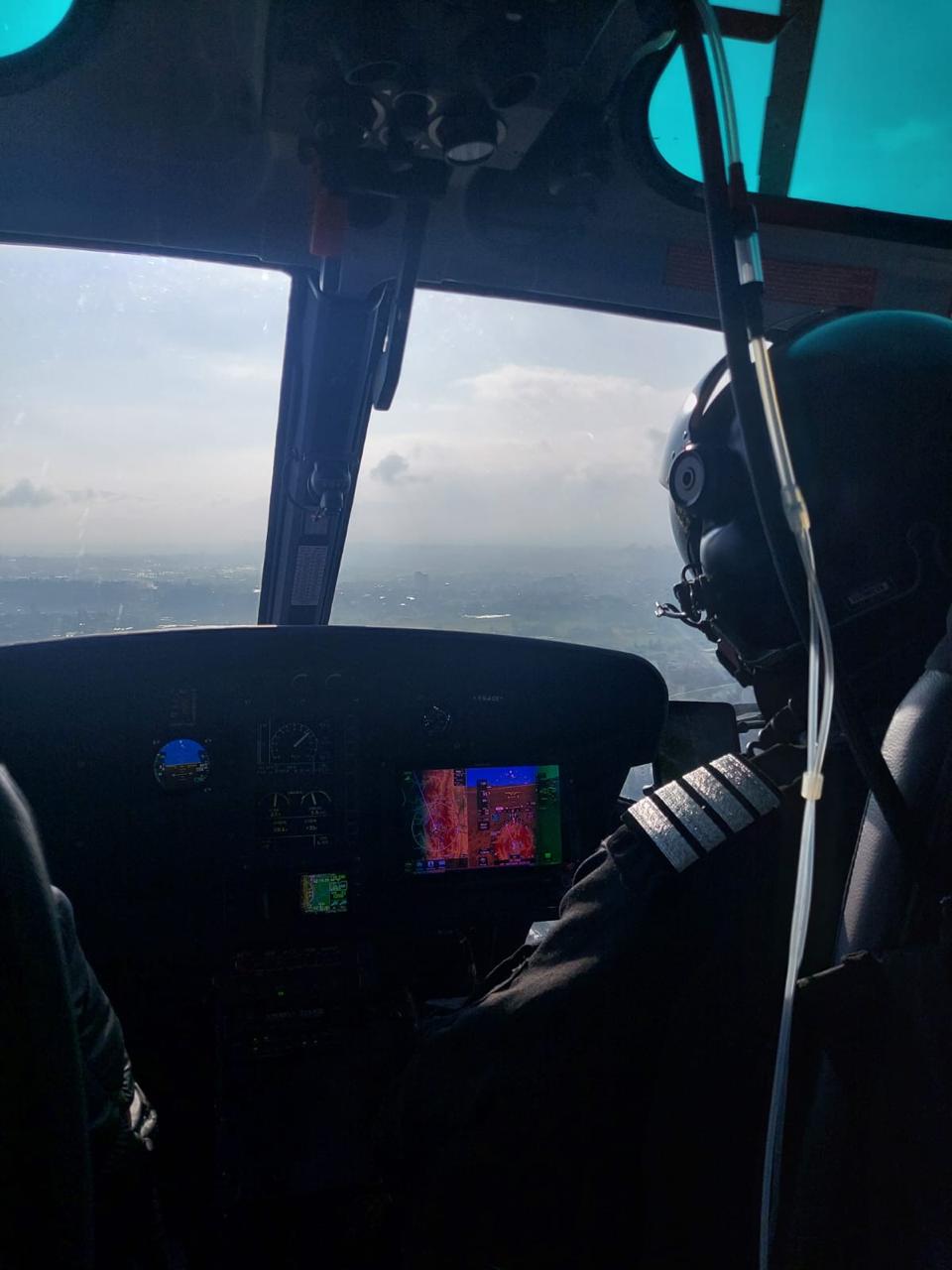
At Everest Sky Helicopter, we offer 24/7 emergency rescue services from Lobuche, operated by experienced pilots using high altitude capable helicopters like the Airbus H125. We also provide onboard oxygen and trained medical staff, and our rescue team coordinates directly with your insurance provider for a smooth, stress free evacuation. For uninsured travelers, we offer private rescue options with full transparency and support throughout the process. Whether you are trekking to Everest Base Camp or climbing nearby peaks, knowing you have a reliable evacuation partner brings peace of mind in the Himalayas.
Insurance Coordination and Medical Assistance
Once we receive your passport copy and insurance document, our operations team immediately contacts your insurance provider to obtain rescue flight approval. We handle the entire process from paperwork to flight dispatch so you can focus on getting better, not dealing with logistics. If your insurance does not cover helicopter evacuation or you are traveling without insurance, we also offer private and shared rescue flights from Lobuche, with transparent pricing and complete support throughout the process.
From Lobuche to Safety
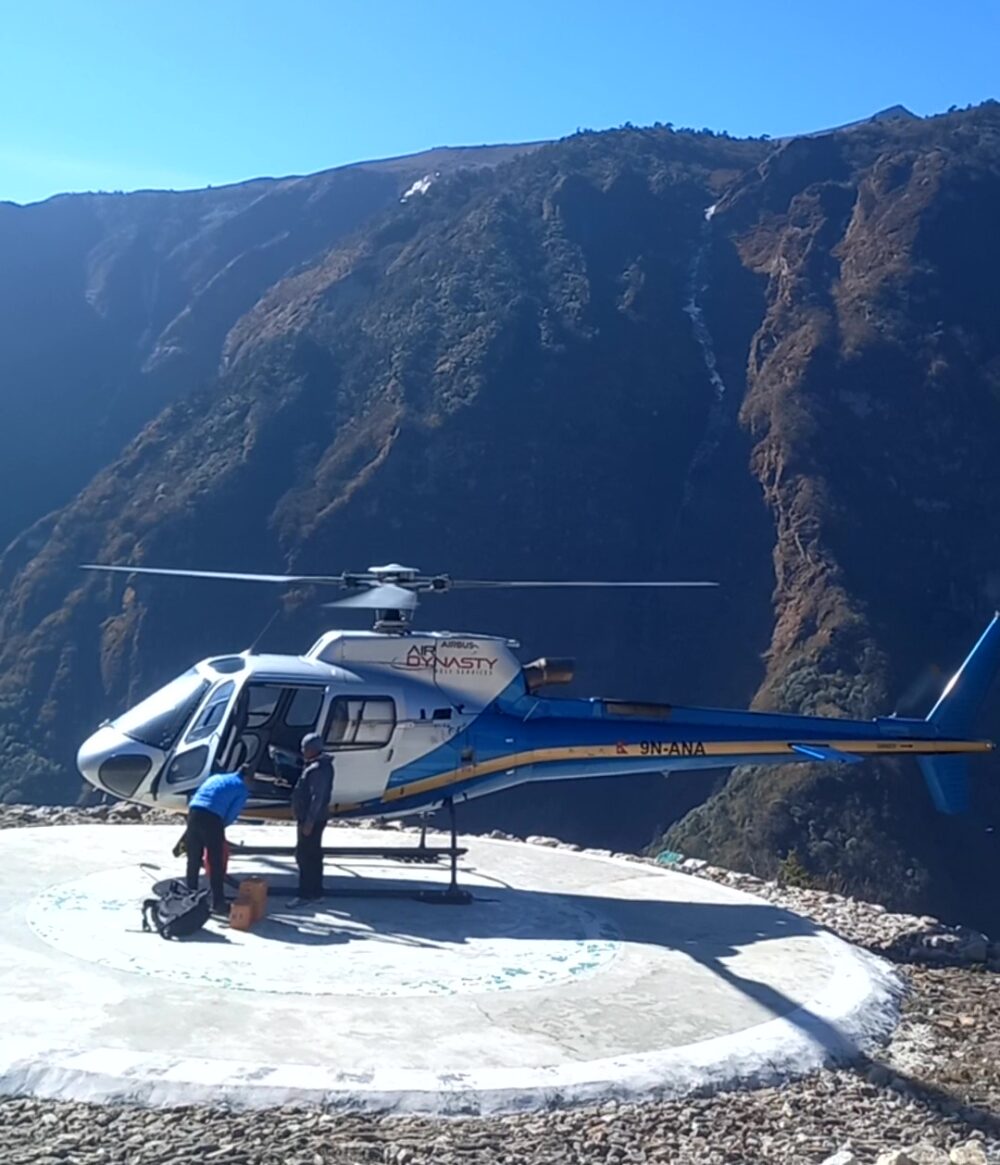
Lobuche is located at a high and exposed elevation of 4,910 meters (16,109 feet), with no road access or medical infrastructure. Our helicopters can land at designated helipads or flat grounds near your lodge, allowing for a quick and secure evacuation. Depending on your condition and flight feasibility, you’ll be flown:
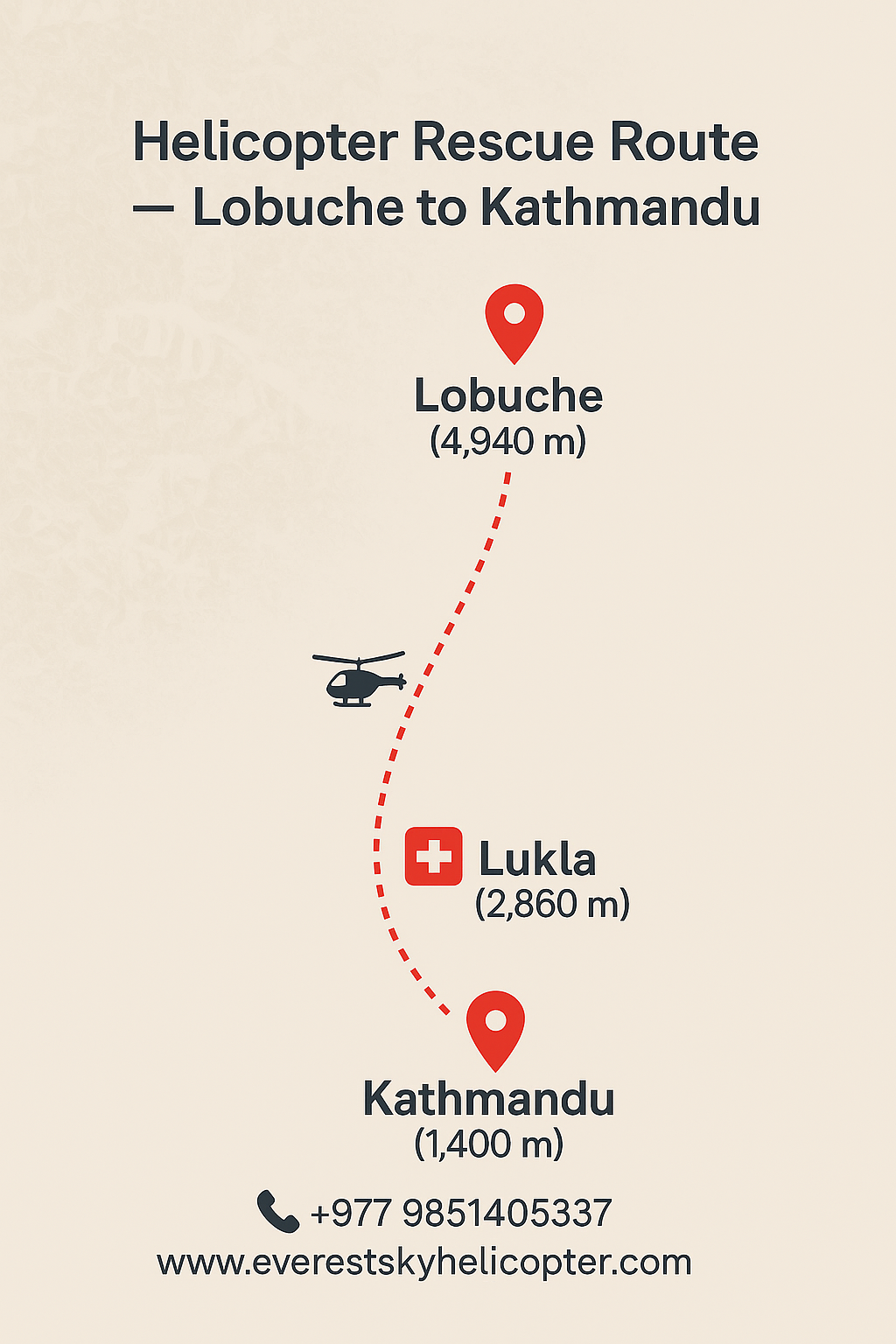
- Directly to Kathmandu if the weather and fuel range allow, or
- To Lukla for refueling, then onward to Kathmandu
For insured travelers, we ensure a direct hospital transfer in Kathmandu with an ambulance ready upon landing.
For self funded rescues, we offer the option to fly you down to Lukla, where you can rest at a lower altitude, receive basic treatment, and make arrangements for further care or travel. Our team is always ready to assist with lodging, guidance, and logistics until you are stable or safely transferred.
Altitude Related Risks Around Lobuche
Lobuche lies at the edge of the danger zone for trekkers ascending too rapidly or without adequate acclimatization. Many fall ill at this stage of the Everest Base Camp trek due to severe oxygen deficiency and the physical toll of trekking for over a week.
Common altitude-related risks around Lobuche include:
- Acute Mountain Sickness (AMS): Headache, dizziness, and shortness of breath
- HAPE (High Altitude Pulmonary Edema): Breathlessness, chest tightness, and blue lips
- HACE (High Altitude Cerebral Edema): Disorientation, slurred speech, and lack of coordination
- Injuries due to fatigue or falls on rocky, uneven terrain
- Hypothermia or weather-related trauma in case of snowstorms or temperature drops
- Severe dehydration or gastrointestinal issues due to altitude and diet changes
Helicopter rescue from Lobuche is often the only safe and time-effective solution, ensuring a swift descent and access to professional medical care.
24/7 Emergency Contact – Call Anytime: Emergencies at this altitude demand immediate attention. If you or someone in your group requires evacuation from Lobuche, contact Everest Sky Helicopter Service any time WhatsApp / Hotline (24/7): +977 9851405337 , Email: [email protected]
Also explore our nearby options for helicopter rescue from Namche, Rescue from Dole, or Everest Base Camp in case of need.







 Write a Review