If you are Planning a trek to Everest Base Camp or just flying into Lukla? Understanding Real Time Lukla weather and flight live conditions is one of the most important parts. The term “Real Time” has a different meaning as the weather in Lukal changes rapidly. Flights to Lukla are famous for their breathtaking views, but also for their unpredictable delays and weather dependent operations.
Traveling to Lukla is not just a flight, it is the beginning of one of the world most iconic Himalayan journeys. Whether you are heading for the Everest Base Camp trek, a helicopter tour, or any trekking journey in Khumbu region, one factor decides everything weather and flight conditions in real time.
At Everest Sky Helicopter Service, we understand that trekkers do not just need tickets or helicopter flights. They need accurate, up to the minute Lukla weather updates and live flight status information to plan safely, avoid delays, and travel with confidence. This guide gives trekkers real time style insights into Lukla weather patterns, flight conditions, delays, and travel tips so you can plan your Everest adventure smartly and stress free.
Lukla Weather by Month: Best Time to Fly and Trek in the Everest Region
Weather conditions in Lukla directly affect both flight operations and trekking experiences in the Everest region. Understanding the seasonal weather patterns can help trekkers choose the best time for their Everest Base Camp trek, Gokyo Lakes trek, Three Passes trek, or Everest Base Camp Helicopter Tour.
| Month | Average Weather | Mountain Views | Trekking Conditions | Crowd Level | Best For |
|---|
| January | Cold and Dry | Excellent | Challenging due to cold | Very Low | Experienced Winter Trekkers |
| February | Cold but Stable | Excellent | Good with proper gear | Very Low | Quiet Everest Treks |
| March | Mild and Comfortable | Excellent | Very Good | Medium | Start of Spring Trekking Season |
| April | Warm and Stable | Outstanding | Excellent | High | Everest Base Camp Trek |
| May | Warm with Clear Mornings | Outstanding | Excellent | High | Trekking and Everest Expeditions |
| June | Wet and Cloudy | Limited | Challenging | Very Low | Flexible Travelers |
| July | Heavy Rainfall | Poor | Difficult | Very Low | Off-Season Adventures |
| August | Rainy and Humid | Moderate | Challenging | Very Low | Quiet Trekking Experience |
| September | Improving Weather | Very Good | Good | Medium | Start of Autumn Season |
| October | Clear and Pleasant | Outstanding | Excellent | High | Best Overall Month |
| November | Cool and Stable | Outstanding | Excellent | High | Peak Trekking Season |
| December | Cold with Light Snow | Excellent | Good | Low | Winter Mountain Views |
Lukla Weather Live Camera and Real Time Operational Insight for Trekkers
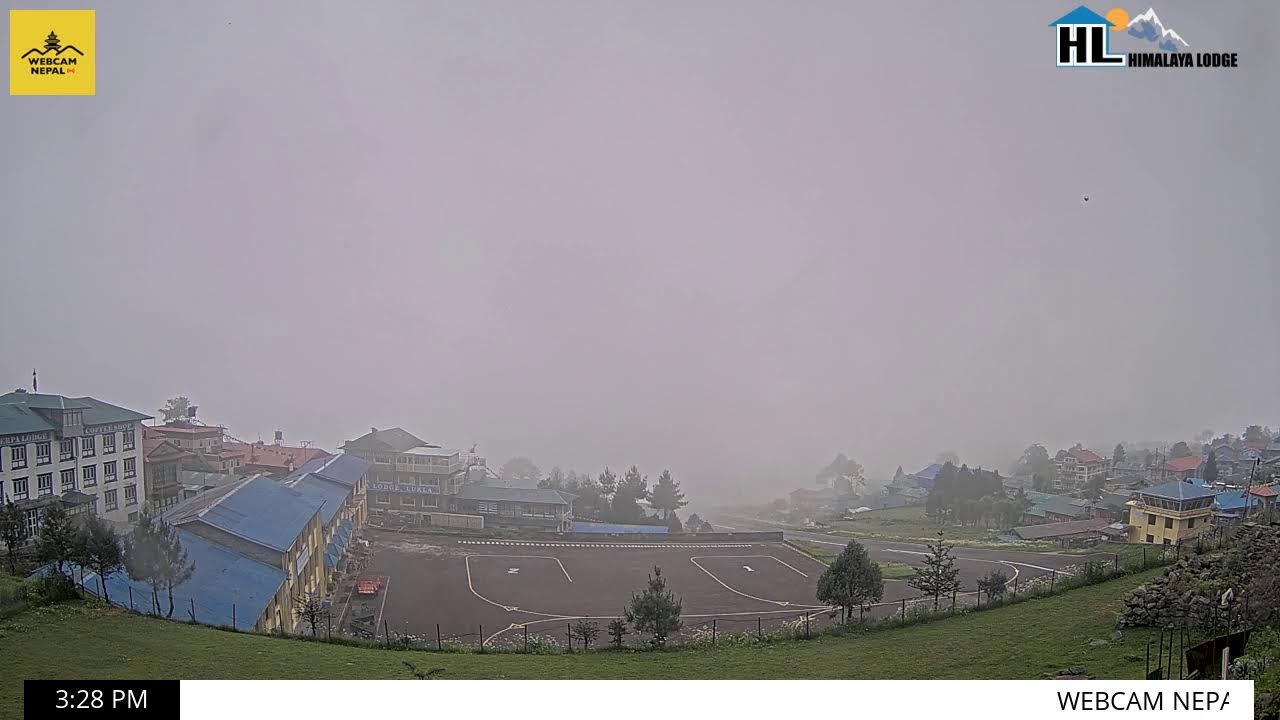
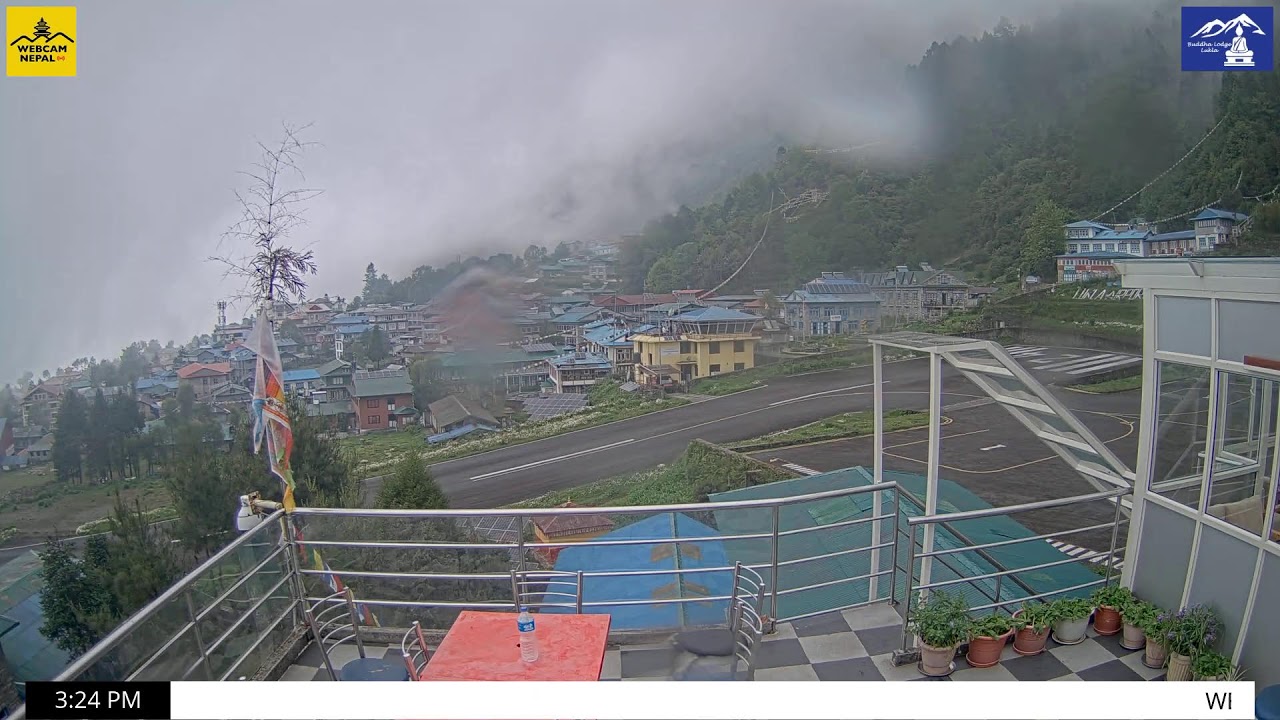
Before any flight to Lukla, real time weather observation is one of the most important decision making tools for both trekkers and operators. Unlike major airports, Lukla does not follow predictable schedules when weather changes rapidly. That is why live visual monitoring through webcams, Lukla Airport Visibility Rules, Flight Safety Standards and real time becomes extremely valuable for understanding actual conditions on the ground. Lukla Airport (Tenzing Hillary Airport) is one of the most weather sensitive airports in the world, and flight operations here follow very strict visibility and safety regulations set by the Civil Aviation Authority of Nepal (CAAN).
Real Time Lukla Weather and Flight Live Camera
You can check real time Lukla visibility and weather conditions here:
Lukla Airport Visibility Rules and Flight Safety Standards
Lukla Airport (Tenzing Hillary Airport) is widely known as one of the most weather dependent and operationally challenging airports in the world. All flight activities here are governed by strict safety and visibility standards established by the Civil Aviation Authority of Nepal (CAAN).
Situated in a deep Himalayan valley surrounded by high mountains and unpredictable terrain, the airport does not rely on radar guidance or instrument landing systems. Because of this limitation, every arrival and departure depends entirely on clear visual conditions and direct pilot observation of the runway and surrounding airspace.
Minimum Visibility Requirements at Lukla Airport
To ensure safe operations in such a challenging environment, clear visibility standards must be met before any flight is allowed.
Fixed Wing Aircraft (Flights to/from Lukla)
- Minimum required visibility: 5 kilometers
- This ensures pilots can clearly see.
- Mountain terrain along the flight path
- Runway alignment before landing
- Valley approach corridor from Kathmandu side
If visibility drops below this level, flights are normally delayed or suspended.
Helicopter Operations Visibility to Lukla
- Minimum required visibility is 1.5 kilometers
- Helicopters have more flexibility due to maneuverability, but still require:
- Clear visual reference to terrain
- Stable wind conditions
- Safe landing approach visibility
Helicopter flights may continue even when fixed wing aircraft are grounded, but only within safe operational limits.
Why Lukla Operates Only Under Visual Flight Rules (VFR)
Lukla Airport does not have modern landing systems such as:
- Instrument Landing System (ILS)
- Radar based approach guidance
- Automated landing assistance
Instead, it operates entirely under Visual Flight Rules (VFR), meaning:
- Pilots must see the runway at all times
- Terrain must remain visible throughout approach
- Navigation is based on direct visual judgment
Operational Reality in the Himalayas (Important Insight)
From a real aviation operations perspective, Lukla flights depend on instant weather stability rather than general forecasts. Even if conditions appear clear in Kathmandu, flights can still be delayed if:
- Cloud layers are forming inside the Khumbu valley
- Visibility is patchy or inconsistent along the route
- Wind conditions are unstable near the airport
- Mountain clouds reduce approach safety margins
This is why Lukla is considered a “live decision airport” rather than a schedule based airport. Lukla Airport operates under one of the strictest visual flight systems in the world. With minimum visibility requirements of 5 km for aircraft and 1.5 km for helicopters, every flight depends entirely on real time mountain weather conditions. There are no shortcuts, no instrument based landings, and no guaranteed schedules. Instead, every decision is based on live visibility, pilot judgment, and safety first aviation protocols.
Winter Season in Everest Region for Trek and Flight (December, January and February)
Winter transforms the Everest region into a peaceful Himalayan wonderland. Snow covered peaks, crystal clear skies, and uncrowded trails create a completely different trekking experience. Temperatures can become extremely cold at higher elevations, especially during the night. However, the rewards include exceptional visibility, quieter trails, and some of the most dramatic mountain scenery of the year. While winter brings colder temperatures and occasional weather related challenges, it also rewards travelers with some of the clearest mountain views of the year. For those who are properly prepared with warm clothing and a flexible itinerary, winter can be one of the most memorable times to visit Everest Base Camp.
Lukla flights continue to operate throughout the winter season, but weather conditions can occasionally cause delays or cancellations.
- Generally clearer skies and excellent visibility.
- Lower passenger traffic compared to peak trekking seasons.
- Easier flight availability and booking flexibility.
- Less congestion at Kathmandu and Lukla airports.
- Morning frost and occasional snowfall can affect operations.
- Strong winds may develop in the Everest region.
- Sudden weather changes can occasionally lead to delays.
- Trekkers should always keep at least 1 or 2 buffer days in their itinerary.
Spring Season in the Everest Region for Trek and Flight (March to May)
Monsoon Season in Everest Region for Trek and Flight (June, July and August)
Autumn Season in Everest Region for Trek and Flight (September, October and November)
Best Time of Day for Lukla Flights (Important Operational Window)
Lukla flights are strictly operated within a morning time window only, as this is when weather conditions in the Everest region are most stable and suitable for safe flying.
Scheduled flight operating hours: 06:00 AM to 11:00 AM (Morning Operations Only)
During this period, visibility is usually clearer, winds are relatively calm, and cloud formation in the Khumbu Valley is at its lowest level. This makes it the most reliable and safest time for both Kathmandu to Lukla Plane fixed wing flights and helicopter operations.
After 11:00 AM, weather conditions in the Everest region often begin to change rapidly, with increasing cloud cover, wind variation, and reduced visibility. Because of this, flights are rarely operated beyond the morning window and are often delayed or cancelled for safety reasons.
- Operator Insight: All Lukla flight operations are designed around this early morning schedule because Himalayan weather is highly unpredictable later in the day. Even if Kathmandu appears clear, Lukla conditions may deteriorate quickly after late morning.
- Helicopter Note: Helicopters also primarily operate within this same morning window, as safety and visibility remain the top priority in high altitude mountain flying.
Why Lukla Flights Get Delayed Even When Weather Looks Clear
Even when the weather in Kathmandu looks perfect, Lukla flights are often delayed because Lukla operates under completely different and highly localized mountain weather conditions. In the Everest region, flight decisions are based on real time visibility, wind stability, and valley conditions rather than general forecasts.
Winds Back in Lukla Airport
- Strong or shifting winds at Lukla runway can suddenly make landing unsafe
- Wind direction changes quickly due to surrounding mountain terrain
- Even light wind in Kathmandu can become strong turbulence in Lukla valley
- Result: Flights may be held or delayed for safety checks
Enroute Weather Condition (Kathmandu to Lukla Corridor)
- Weather can be clear at both airports but unstable in between
- The flight path passes through narrow Himalayan valleys
- Cloud layers or turbulence may form mid route without warning
- Result: Aircraft may be held in Kathmandu or turned back
- Clouds form rapidly in the Khumbu region due to temperature shifts
- Valleys trap moisture, creating sudden white-out conditions
- Visibility can drop within minutes even after a clear morning
- Result: Flights wait for cloud clearance before departure
Sudden Wind Changes in the Himalayas
- Mountain wind patterns change quickly after sunrise
- Downdrafts and crosswinds affect approach stability
- These changes are difficult to predict in advance
- Result: Flights are delayed until wind stabilizes
Airport Visibility vs Kathmandu Weather Difference
- Kathmandu may show clear skies, but Lukla can still be cloudy
- Lukla’s weather is influenced by local mountain terrain, not city conditions
- Visibility at runway level is the final deciding factor
- Result: Even “perfect Kathmandu weather” does not guarantee flights
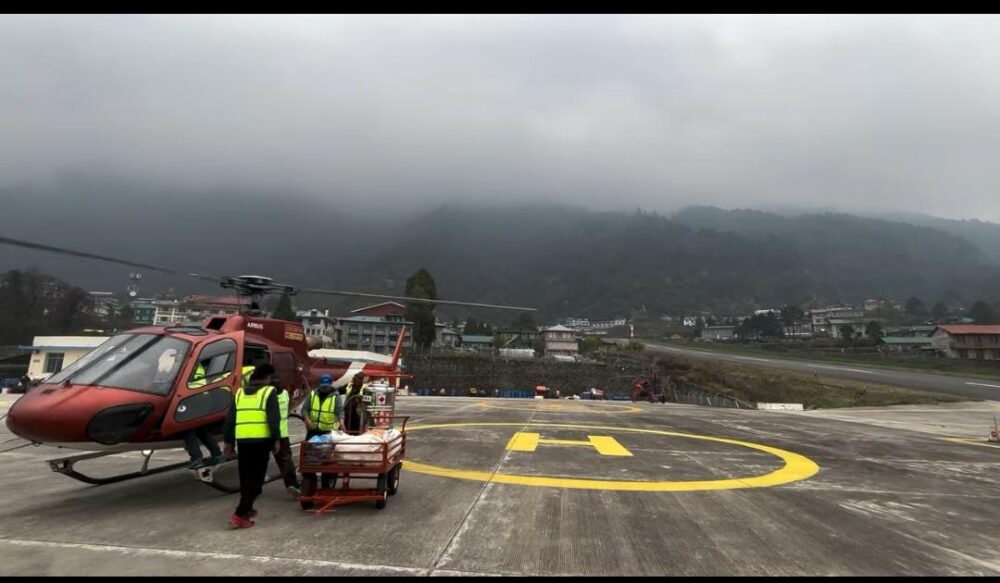
When Lukla weather becomes unstable or visibility drops suddenly during operations, Kathmandu to Lukla helicopter flights play a critical role in maintaining access to the Everest region. Helicopters are more flexible than fixed wing aircraft because they can adjust altitude and routing based on real time weather, valley cloud conditions, and wind patterns along the flight corridor. If landing at Lukla Airport is not possible due to safety limitations, the pilot may take an operational decision to divert and land at Surke Helipad, located below Lukla. Surke is often used as an alternative landing point when Lukla experiences temporary weather closures, allowing trekkers to continue their journey to Everest by walking just 45 minutes from Surke to Lukla. This flexibility makes helicopter operations a reliable backup during unpredictable Himalayan weather conditions.
For real time bookings and updates, you can check our service here: Kathmandu to Lukla Helicopter Flight. For instant assistance, flight updates, or booking support, contact us directly via WhatsApp or Call us at +977 9851405337
Live Lukla Weather Update
Real time Weather and flight update overview for Lukla region. Conditions can change quickly due to Himalayan terrain.
Flight Conditions
- Temperature: Changes with the months and season
- Wind: Mountain wind can change suddenly
- Clouds: Fast formation possible in Khumbu Valley
- Visibility: Can change within minutes
Safety Note
Lukla weather is highly unpredictable. Flights may be delayed even when Kathmandu is clear. To Know more Connect with us on WhatsApp we coordinate with the live weather conditions and manual with our team in Lukla.
Travel Tip
Morning flights (06:00 Am to 11:00 Am) have the highest success rate in Lukla. Weather changes where to reach Lukla Airport Everest Sky Service offers both lukla plane and helicopter flight.