The dream of witnessing the world’s highest mountain has inspired countless travelers from the United Kingdom for decades. Mount Everest is not just a peak; it is a symbol of adventure, resilience, and natural wonder. For many British travelers, seeing Everest is a bucket list experience a journey that combines history, culture, and breathtaking landscapes.
Thanks to modern aviation and well organized helicopter services, visitors can now experience the Everest region without the demanding trek. The Everest Base Camp Helicopter Tour offers a once-in-a-lifetime opportunity to witness the Himalayas from the sky, land at iconic viewpoints, and enjoy luxury experiences all in a single day.
For travelers from United Kingdom who often have limited holiday time, this helicopter tour is the perfect solution to explore Everest in comfort and style.
Why Everest Is Special for British Travelers
Mount Everest holds a unique place in British history. British expeditions explored the Himalayas extensively throughout the 20th century. Many early attempts to summit Everest were led by British climbers, and the mountain became closely associated with British mountaineering history.
The historic first ascent of Everest in 1953 by Edmund Hillary and Tenzing Norgay during the 1953 Mount Everest First Ascent remains one of the greatest achievements in exploration history. This historic connection makes Everest particularly fascinating for British travelers who are drawn to the mountain’s heritage as well as its natural beauty.
Today, travelers from the UK can combine adventure with luxury by taking the Everest Base Camp Helicopter Tour, experiencing the Himalayas in a way that is both thrilling and accessible.
What Is the Everest Base Camp Helicopter Tour?
The Everest Base Camp Helicopter Tour is a scenic helicopter flight that allows travelers to explore the Everest region without the physical demands of trekking. From Kathmandu, the helicopter flies directly into the heart of the Himalayas, providing breathtaking views of the world’s tallest peaks, glacial valleys, and traditional Sherpa villages.
- The tour typically lasts 4 to 5 hours, depending on the stops and the type of package booked. Highlights include:
- Aerial flyovers of the Khumbu region
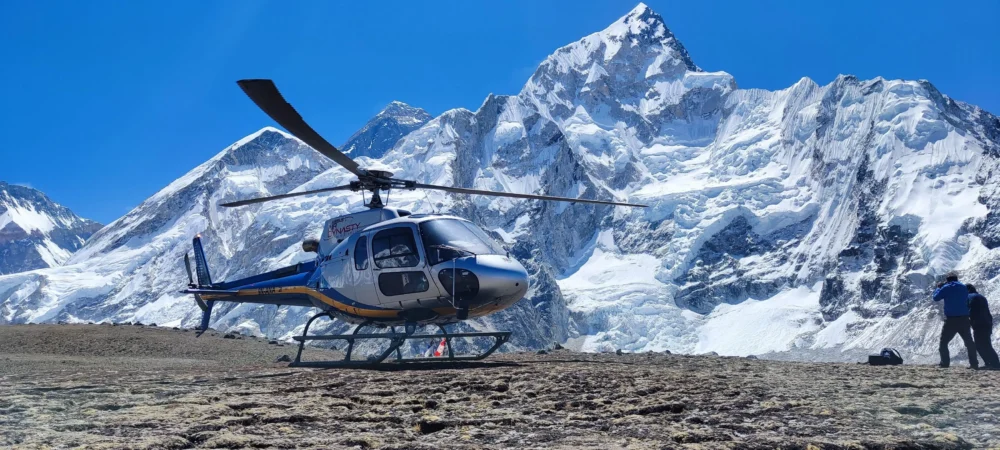
- Landing at iconic viewpoints such as Kala Patthar
- Breakfast or coffee at Hotel Everest View
- Close up views of Mount Everest and surrounding peaks
This helicopter tour is ideal for travelers who want to witness Everest’s majesty within a single day, offering luxury, convenience, and adventure in one package.
Typical Flight Route
The Everest Base Camp Helicopter Tour follows a well-planned route to maximize sightseeing opportunities while ensuring passenger comfort and safety.
Departure from Kathmandu: The tour begins early in the morning at the domestic airport in Kathmandu. Early departures are preferred because morning skies in the Himalayas are usually the clearest, providing the best visibility for aerial photography and sightseeing.
Flyover of the Himalayan Foothills: As the helicopter climbs above Kathmandu Valley, travelers witness lush hills, deep river valleys, and terraced landscapes. The scenery gradually changes from urban areas to rugged mountains, offering a preview of the dramatic Himalayan terrain ahead.
Lukla Stopover: The helicopter often stops at Lukla, known worldwide as the gateway to Everest treks. This brief stop allows passengers to stretch their legs, observe the famous mountain airport, and take photos of the surrounding peaks. For many travelers, even a short glimpse of Lukla is an exciting experience.
Scenic Flyover of Namche Bazaar: After leaving Lukla, the helicopter flies over Namche Bazaar, the cultural hub of the Sherpa community. From the air, visitors can see colorful buildings, monasteries, and the bustling life of this Himalayan town that is otherwise accessible only via trekking.
Landing at Kala Patthar: One of the tour’s most dramatic moments is the landing near Kala Patthar. Kala Patthar is the most famous viewpoint for observing the summit of Mount Everest. From this high vantage point, travelers enjoy unobstructed views of Everest and surrounding peaks like Lhotse, Nuptse, and Pumori. The experience at Kala Patthar is often described as emotional and awe inspiring. Visitors feel the enormity of the mountains and the serenity of the Himalayas in a way that trekking alone may not fully provide.
Breakfast at Hotel Everest View: Another highlight is the breakfast stop at Hotel Everest View. Perched high above Namche Bazaar, the hotel offers panoramic views of Everest and the surrounding peaks. Travelers can enjoy breakfast, tea, or coffee while soaking in the scenery one of the most memorable aspects of the tour.
Why British Travelers Choose the Everest Helicopter Tour
British travelers have specific reasons for preferring helicopter tours over trekking:
- Limited Holiday Time: Most UK travelers spend one to two weeks in Nepal. The helicopter tour provides the Everest experience in a single day, saving valuable time while still delivering a memorable adventure.
- Comfort and Convenience: Unlike trekking, which requires physical stamina, helicopter tours are comfortable, safe, and require minimal effort.
- Stunning Photography Opportunities: The aerial perspective offers unmatched photo opportunities of the Himalayas. From snow-clad peaks to glacial valleys, photographers can capture breathtaking shots without the physical challenges of trekking.
- Connection to History: Flying over the regions explored by historic British expeditions allows travelers to feel a personal connection to Everest’s mountaineering heritage.
- Luxury and Unique Experiences: From private helicopter charters to breakfast at a high altitude hotel, the tour combines adventure with comfort and exclusivity.
Best Time to Visit Everest via Helicopter Tour
The Everest Base Camp Helicopter Tour is highly dependent on weather conditions. The two best seasons for the flight are:
Spring (March to May)
- Clear skies and moderate temperatures
- Snow-free valleys for better views
- Blooming rhododendrons in lower altitudes
Autumn (September to November)
- Stable weather with minimal clouds
- Crisp and clear skies for photography
- Excellent visibility of Everest and surrounding peaks
- British travelers should plan their visit during these seasons for maximum enjoyment and safety.
Safety Considerations
Safety is a top priority for helicopter tours in the Everest region. Experienced pilots with expertise in mountain flying operate all flights. Modern helicopters are equipped with advanced navigation and safety systems to handle high altitude conditions.
- Oxygen is available for passengers
- Altitude is carefully managed during landings
- Helicopter capacity ensures comfort and safety for all passengers
- Passengers are briefed on safety protocols before departure, ensuring a secure and enjoyable flight.
- Private vs. Shared Helicopter Flights
Travelers can choose between:
Shared Helicopter Flights
- Affordable option
- Typically 4 to 5 passengers per helicopter
- Ideal for solo travelers or budget conscious tourists
Private Helicopter Flights
- Exclusive and flexible
- Perfect for couples, families, or small groups
- Allows customized itineraries and longer stops at viewpoints
Both options provide stunning Himalayan views, but private flights offer a more intimate and personalized experience.
Cultural Experiences Along the Flight
The helicopter tour also provides glimpses of the unique Sherpa culture. From the air, travelers can see monasteries, villages, and traditional agricultural terraces. For British visitors, this adds a cultural dimension to the adventure, connecting them to the region’s people and traditions.
Photography Tips for British Travelers
- Morning Light: Departing early ensures soft light on Everest’s peaks
- Wide-Angle Lens: Ideal for capturing panoramic mountain views
- Window Seat: Essential for unobstructed photography
- Fast Shutter Speed: Helps to avoid motion blur during flight
- Professional photographers and amateurs alike will find this tour ideal for capturing once-in-a-lifetime Himalayan images.
Everest Base Camp Helicopter Tour with Kala Patthar Landing Cost (Sharing Basis)
The Everest Base Camp Helicopter Tour with Kala Patthar Landing is one of the most premium and unforgettable Himalayan experiences, offering a close-up view of Mount Everest without the need for long trekking. On a sharing basis, the tour cost is USD $1350 per person, which includes a scenic helicopter flight from Kathmandu, a landing at Kala Patthar for panoramic Everest views, and a return journey with aerial sightseeing over the Khumbu region. This package is ideal for travelers who want to experience Everest in comfort, safety, and limited time.
| Tour Type | Route | Cost per Person | Booking |
|---|
| Sharing Helicopter Tour | Kathmandu to Everest Base Camp Helicopter Tour with Kala Patthar Landing and Hotel Everest View | USD $1350 |
Book on WhatsApp
|